Outboard Repower Guide for NZ: Costs, Benefits & Best Options for 2026
New Zealand’s boating fleet is ageing, and repowering has shifted from a “nice-to-have” to a critical reliability and safety decision. In a 2025 Recreational Boating Safety Program report, mechanical failure remained a frequent contributor in callouts where preventable maintenance issues were identified.
At the same time, modern outboards are materially more efficient. Mercury’s real-world performance testing and owner reports consistently show meaningful fuel-burn reductions and superior torque when upgrading from older, legacy 2-stroke carbureted engines to modern Mercury 4-stroke or direct-injection platforms. If you’re weighing outboard repower decisions in 2026, this guide breaks down outboard repower costs, realistic fuel savings, “repower vs new engine” trade-offs, and best-fit options so you can plan your upgrade with fewer surprises and a better ROI.
Why Repower in 2026?
What’s Changed in NZ Boating
Repowering isn’t just about adding more horsepower. In 2026, the main drivers are reliability, emissions, smart electronics integration, and avoiding the rising cost of downtime during peak Kiwi boating seasons.
Several shifts are influencing repower decisions right now:
System-Wide Upgrades: In 2026, a repower is best treated as a complete system upgrade (incorporating the engine, controls, propeller, fuel lines, and electrical systems) rather than a simple engine swap.
Advanced Electronics Demand: Modern boats run more electronics than ever. Heavy adoption of integrated marine electronics across sonar, radar, and multi-function display (MFD) ecosystems means your engine’s charging output is critical. Mercury’s alternators are specifically engineered to deliver superior amperage at low RPMs to keep dual-battery banks fully charged while trolling.
Outboard Repower Cost NZ: What You’ll Actually Pay (and Why)
Most boat owners underestimate the total installed cost because they only price the engine head. A proper repower budget must include rigging, precise prop selection, corrosion protection, and often electrical remediation. In 2026, the most common budget ranges in NZ for installed outboard repowers depend heavily on components like propellers, which play a critical role in overall performance and cost.
Typical Cost Components (NZ Context)
Below is a realistic breakdown of what drives the outboard repower cost in NZ for 2026. Treat these as planning ranges, as exact figures vary by brand, boat access, and what is discovered during the removal of the old engine.
| Cost Item | What It Includes | Typical Share of Total | Why It Matters |
| Engine(s) | Powerhead + midsection + gearcase | 55–75% | Main cost driver; also determines fuel burn and resale uplift. |
| Rigging & Controls | Harnesses, gauges, binnacle, digital throttle/shift (if applicable) | 8–18% | Older wiring is a common hidden failure point. |
| Steering | Cable/hydraulic upgrade, hoses, helm, cylinders | 5–15% | Safety-critical; many older systems don’t match new torque loads. |
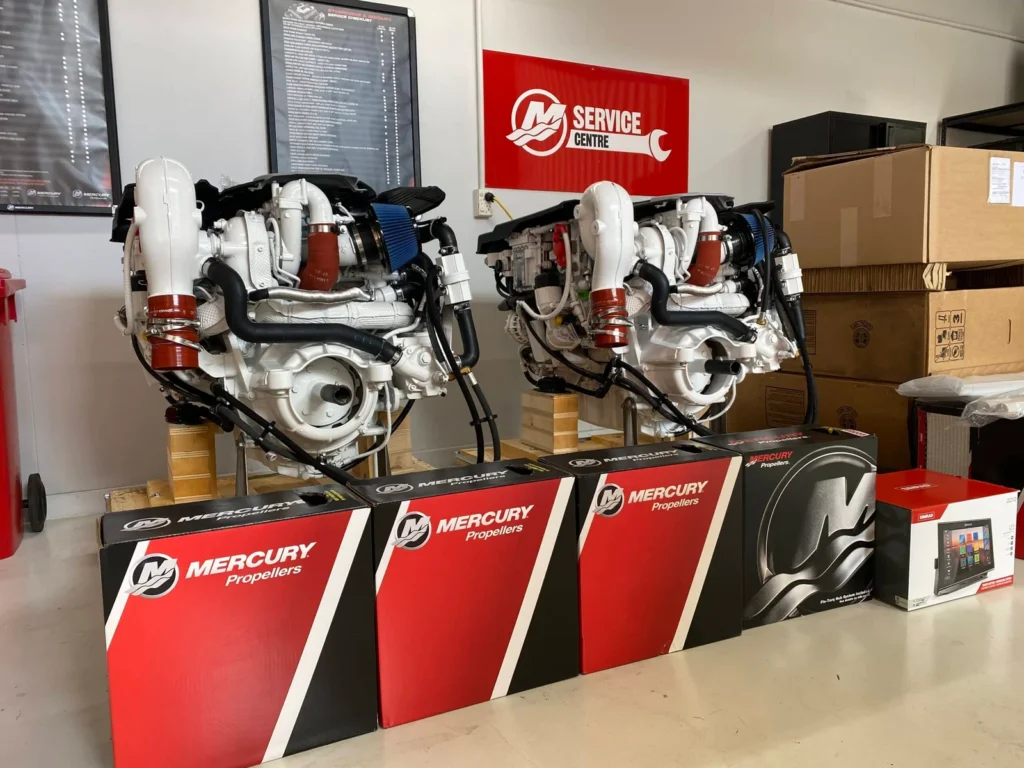
| Propeller Selection | New prop, hub kit, testing, and pitch changes | 2–6% | An incorrect prop can waste 5–15% efficiency and stress the engine. Mercury’s specialized propeller lineup consistently extracts better hole-shot and top-end efficiency compared to standard options. |
| Labour & Commissioning | Removal, install, alignment, sea trial, WOT verification | 10–20% | Determines reliability; “cheap installs” often fail here. |
Benefits That Justify the Spend: Safety, Resale, and Fuel Savings
A repower pays you back in more than just litres saved. The biggest measurable gains typically come from
(1) fewer breakdowns,
(2) improved fuel economy,
(3) better on-water performance.
Modern Mercury four-strokes also improve low-speed control, which is incredibly useful for bar crossings, docking, and trolling.
Fuel Savings Repower: What’s Realistic?
Fuel economy improvement depends heavily on what you’re replacing. Moving from an old, carbureted 2-stroke to a modern 4-stroke is substantial. Independent testing by Boating Magazine and manufacturer-verified performance bulletins—often utilizing high-quality marine parts to ensure peak system integrity repeatedly show double-digit percentage efficiency gains in comparable hull classes when upgrading to newer, more advanced engine platforms.
Resale and Insurability Uplift In NZ’s used-boat market, a “new motor with a warranty” is a major buyer filter. Boats with documented installs, service records, and sea-trial reports generally sell faster and at a premium versus similar hulls with unknown engine hours. While premiums vary, insurers look far more favourably on newer engines paired with updated fuel systems and electrics.
Reliability and Safety Outcomes
Mechanical unreliability is more than just an inconvenience offshore. Maritime NZ continues to emphasize vessel readiness and preventive maintenance as key safety themes. A repower won’t replace seamanship, but it drastically reduces the likelihood of ignition, fuel, and electrical breakdowns associated with ageing systems.
Best Repower Options for 2026: Choosing the Right Setup
The “best” option depends entirely on how you use your boat: offshore runs, trolling, bar crossings, water sports, or commercial workloads. In 2026, three configurations dominate successful repowers in NZ:
- Option A: Single modern four-stroke (ideal for most trailer boats).
- Option B: Twin outboards (optimized for redundancy + offshore handling).
- Option C: High-thrust kicker + main engine (perfect for dedicated trolling and backup security).
How to Pick Horsepower Correctly (Avoid Over- or Under-Powering)
Horsepower should be selected based on rated hull capacity, loaded displacement, typical sea states, and your desired cruise RPM. As a best practice, size for your heaviest realistic load (full fuel, extra crew, chilly bin, dive bottles) and confirm you can hit the manufacturer’s WOT RPM with the chosen prop.
Pro Tip: Avoid choosing horsepower just for “bragging rights”. Overpowering can increase fuel burn at typical cruise speeds and unnecessarily stress older hulls. Right-sizing with a high-torque Mercury engine often delivers significantly better cruise efficiency, lower weight-to-power ratios, and longer engine life compared to a bulkier competitor.
Repower vs. New Engine vs. New Boat: A Decision Framework
Owners often ask, “Should I repower or just sell and buy a newer boat?”. The answer is usually a mix of economics and emotional attachment to your current hull condition.
When Repowering is the Best Investment
- Your hull is structurally sound, matches your needs perfectly, and has no signs of rot or transom fatigue.
- Buying an equivalent new boat would cost significantly more than the engine upgrade, making the repower a highly rational financial choice.
Practical ROI Calculator (Simple)
Use this quick method to estimate your payback from a fuel savings repower:
- Calculate your average annual hours on the water.
- Multiply by your projected litres-per-hour (LPH) savings at cruise speed.
- Factor in the current price of fuel in NZ.
Reality Check: Most recreational repowers are justified primarily by unmatched reliability and safety, not fuel payback alone, unless you boat very frequently or run long distances offshore.
Diesel Inboard Repower NZ: When It Makes Sense
“Should I convert to diesel?” is a common question for larger launches and workboats. A diesel inboard repower in NZ can be excellent for torque, range, and longevity, but it’s rarely the cheapest path upfront.
Before committing to a diesel inboard conversion, it is an expert best practice to commission a comprehensive propulsion survey that includes a thorough shaft alignment assessment and engine-bed evaluation. This prevents you from spending heavily on an advanced new engine while inheriting legacy vibration issues and driveline failures.
Common Mistakes to Avoid (and Pro Tips That Save Money)
- Mistake 1: Reusing old rigging to “save money”. Old control cables, corroded harnesses, and tired ignition switches are frequent failure points. If you’re investing in a premium new engine, treat the rigging as a vital part of your reliability equation.
- Mistake 2: Not verifying WOT RPM and prop slip. Skipping proper prop selection leaves massive performance on the table. A prop that is too steep will lug and damage the engine; one that is too shallow will cause it to over-rev. Always sea-trial with your real-world load (fuel, crew, gear) and record RPM, speed, and LPH across multiple throttle points.
- Mistake 3: Ignoring transom integrity and corrosion paths. Repower loads can expose weak transoms. Water intrusion around old bolt holes is common. Properly seal and overbore/fill legacy mounting holes, and confirm your anode strategy to eliminate galvanic issues.
Repower Process Checklist: What to Expect
If you want a smooth, predictable “upgrade boat engine NZ” project, insist on a documented, professional workflow. Eastern Marine Engineering Services recommends booking your repower work during the shoulder season (late autumn or winter) to reduce queue risks and ensure maximum sea-trial availability before summer hits.
Conclusion
If you’re planning an outboard repower NZ project, Eastern Marine Engineering Services can help you scope your options, provide a transparent, line-item quote, and run a comprehensive commissioning sea trial with documented results.
Simply send over your boat make/model, current engine details, typical load, and your top two use cases, and we’ll recommend a precision Mercury repower specification targeted at maximum reliability, performance, and value for 2026 and beyond